

In this article, we explore the thickness of cubicle walls and the concept of panel creep, which can significantly affect office layouts. Understanding these factors is essential for optimizing space in any work environment.
Key Takeaways
- Cubicle wall thickness typically ranges from 2 to 4 inches.
- Panel creep refers to the unusable space taken up by the thickness of cubicle panels.
- Calculating panel creep is crucial for maximizing office space.
- Thinner panels can help reduce panel creep but may limit cabling options.
How Thick Are Cubicle Walls?
Cubicle walls, or panels, vary by manufacturer, but they generally fall between 2 to 4 inches thick. This thickness is important when planning office layouts because it can impact how many cubicles fit into a given space.
What Is Panel Creep?
Panel creep is a term used to describe the unusable space that the thickness of cubicle panels occupies. Depending on the panel system you choose, this can have a significant impact on the number of cubicles you can fit into your office.
Calculating Panel Creep
To calculate panel creep, you need to consider the thickness of the panels and the number of panels in your layout. Here’s a simple formula:
- Identify the thickness of the panels.
- Count the number of panels in the layout.
- Multiply the thickness by the number of panels.
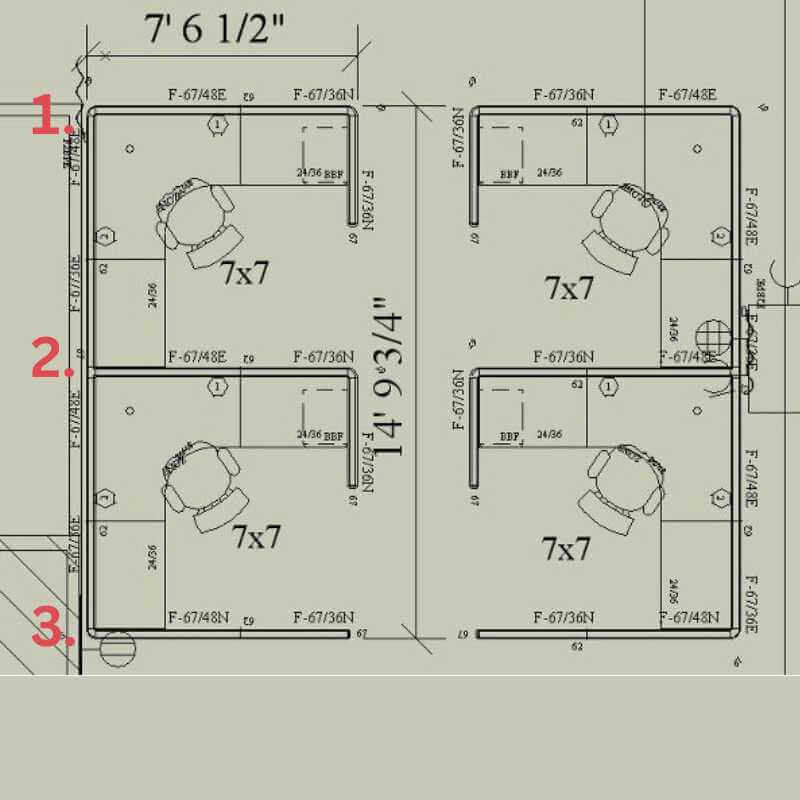
For example, if you have cubicles that are labeled 7 by 7 feet, the actual space they occupy will be larger due to panel creep. If each panel is 3.25 inches thick and there are three panels, you would calculate:
- 3.25 inches x 3 panels = 9.75 inches
Now, add this to the original dimensions of the cubicles:
- 7 feet (84 inches) + 9.75 inches = 93.75 inches
This means the 2 cubicles will actually take up 14′ 9.75″ of space instead of just 14′.
The Impact of Panel Creep on Layouts
In layouts with only a few cubicles, a few inches might not seem like a big deal. However, when you’re planning for larger spaces, those inches can add up quickly. Whether you’re fitting in two cubicles or 200, panel creep is a factor you can’t ignore.
Best Practices for Minimizing Panel Creep
To maximize your floor space and minimize panel creep, consider the following:
- Choose thinner panels: Aim for panels that are around 2 inches thick. This can help reduce the overall space taken up by the cubicles.
- Consider cabling needs: Keep in mind that thinner panels may not provide enough room for extensive cabling. If your office requires a lot of wiring, you might need to opt for thicker panels.
Example of a Tight Layout
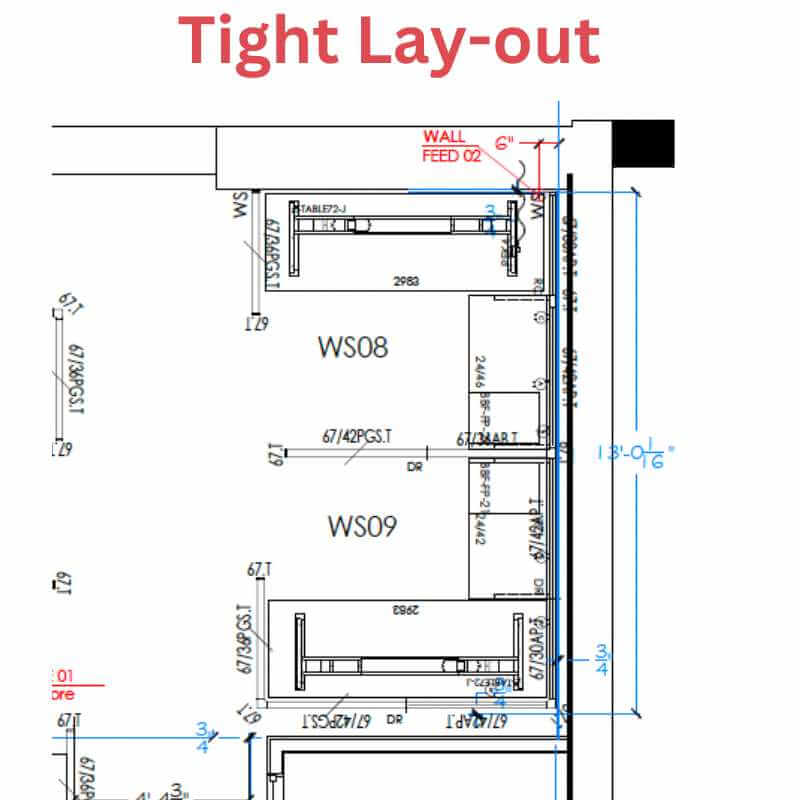
Let’s look at a scenario where you have a tight layout for two cubicles wedged between two existing walls. In this case, you might decide to use 2-inch thick panels on the top wall. This is a strategic choice because if the panels are even slightly off, you might not be able to fit the cubicles in at all.
Conclusion
No matter the size of your office or the number of cubicles you need, understanding the thickness of cubicle walls and the concept of panel creep is essential. By factoring these elements into your planning, you can create a more efficient workspace. If you’re looking for cubicles or need help with your office layout, please reach out we would love to help.